Human habitat

Articles

Paradise Lost

Sustainable development and a stable climate – these are human rights. The GPM speaks with Bonny Ibhawoh, Chair of the UN Expert Mechanism on the Right to Development. And, the Chagossian people have a right to return to their ancestral homeland, in the middle of the Indian Ocean. Big problem: the UK and US have turned it into a huge military base — launch pad for US wars around the planet. The GPM speaks with author David Vine about the plight and human rights struggle of the Chagossian people.


Genocide Infection

Amidst the death and destruction Israel-USA has wrought in its genocidal war on Gaza, infectious disease now plagues the besieged enclave – diseases few if any drugs can treat. We speak with the author of a recent Lancet report — Multidrug-resistant bacteria amid health-system collapse in Gaza.


Cold as ICE

They’re as cold as ICE. As US-backed Israeli forces terrorize Gaza, reducing the long-besieged enclave to rubble, smashing its people to bits, Donald Trump’s masked, plain-clothed, paramilitary militia terrorize black, brown and Latino communities coast to coast. The GPM speaks with antiwar/justice group CODEPINK. And, two dozen Canadian Senators call for a comprehensive arms embargo on Israel. We speak with one of them.


Island of Hope in a Sea of Oppression

In brutalized Palestine — an oasis of liberation and hope. The GPM speaks with Mazin Qumsiyeh, founder/director of the Palestine Institute for Biodiversity & Sustainability. And, fainter hope – that Western leaders will bring depraved Israeli crimes to a halt. Look to Europe, not Israel’s conjoined twin, Israel-USA. Europe is where the Zionist mess began. So says Israeli historian Ilan Pappe.


Criminal Kingpins

Criminal arrest warrants against Benjamin Netanyahu and Yoav Gallant; more charges and warrants in the pipeline. A conversation about the ICC with British barrister Toby Cadman. And, a conversation with Francesca Albanese, about US-Israeli crimes, impunity, and justice


Stamping It Out

Gender-based Israeli violence, extermination and genocide in Gaza. A new report from the UN Independent International Commission of Inquiry on the Occupied Palestinian Territory. A conversation about Israel’s war on Gaza with Middle East affairs commentator Mouin Rabbani. And, human rights abuse and corporate takeover in the United States. A conversation with one of the authors of another UN report.


Inspired by Hind Rajab

A year after the brutal murder of 6-year-old Hind Rajab, trapped in a bullet-ridden car in the ruins of Gaza City, a Belgian-based foundation hunts down Israeli war criminals in the little girl’s name. And, in the heart of Israeli apartheid darkness, a Palestinian biodiversity group rescues native Palestinian flora and fauna from settler-colonial eco-vandalism.


Domicide

Ceasefire in Gaza: respite for those who’ve survived Israel’s genocidal onslaught – perhaps. And homeless, amid the ruins left behind by US bombs and missiles. The GPM speaks with Paula Gaviria Betancur, UN Special Rapporteur on the human rights of internally displaced persons. And, an intensive care pediatrician tells the UN Security Council about Israel’s destruction of Gaza’s health care system.


Nuking Paradise

Eighty years after the bombing of Hiroshima and Nagasaki, the real reasons for America’s hideous assault have been unearthed by a small army of scholars. Among these – a guy named Glenn Alcalay, Associate Professor of Anthropology at John Jay College of Criminal Justice, at City University of New York.


Apes on Steroids

The Great Acceleration: Earth systems commandeered by permanent human growth economics, fueled by coal, oil and gas. A quarter of the planet’s core energy base — natural primary productivity — appropriated for human food, fiber and fuel production. The GPM speaks about human socioeconomic metabolism and appropriation of net primary production with Vienna University ecologist Fridolin Krausmann. And, about the mid-20th century Great Acceleration with Georgetown University historian John McNeill.


Killing the Future

Killing the future in Gaza. Reducing it to rubble. Forcibly transferring its people into filthy tent camps, or onto the street. Starving them. Hunger and disease go hand in hand. The GPM speaks with Alex de Waal, Executive Director of the World Peace Foundation and authority on human-engineered food crises, and with Margaret Harris, global spokesperson for the World Health Organization.


Tipping Points

In the heart of one of Canada’s biggest cities, paradise. Below a city dweller’s feet, a pulsating, living network. All around us on this living planet, the clear and present danger of sliding into oblivion.


Beautiful Resistance

For those who’ve never visited a Palestinian refugee camp, these are not dense tent or tin shacks encampments. They’re more like barrios; densely packed, tightly knit, fully functioning communities. On a very recent trip, the GPM visited one of Palestine’s largest refugee camps – Aida – in the southern West Bank town of Bethlehem.


Genocide by Home Demolition

In the seven months since Hamas’ daring incursion into southern Israel, the Israeli military has demolished over 300,000 Gazan homes — almost three-quarters of Gaza’s housing stock — killing an estimated 35,000, most of them women and children. Countless thousands of Gazans remain buried under the rubble of their humble homes. Armed with US bombs and missiles, Israel demolishes Palestinian homes in an instant. Palestinian suffering and trauma will endure for generations. What’s its aim? Ethnic cleansing, genocide, and the consolidation of the settler-colonial regime it established in 1948, says Israeli author and activist Jeff Halper. Halper is a founding member of the Israeli Committee Against House Demolitions. He’s also the author of a host of books, including An Israeli in Palestine (2010), War Against the People (2015), and Decolonizing Israel, Liberating Palestine: Zionism, Settler Colonialism and the Case for One Democratic State (2021).


Land & People

Clinging to the walls of a fertile valley beneath the city of Bethlehem, a half dozen kilometers south of Jerusalem, alienated from the holiest of Palestinian towns by walls, barbed wire and a string of mega-colonial settlements, boxed in by settler-only roads and militarized checkpoints, Mazin and Jessie Qumsiyeh and their friends are planting native Palestinian seeds, growing fruits and vegetables, raising chickens, rabbits and fish, and offering up habitat for birds, insects and other wildlife. Rescuing their beloved landscape cruelly scarred by land thieves without true roots.


Day of Two Suns

The Day of Two Suns: 70 years ago, the Pentagon conducted its biggest-ever atmospheric H-bomb test at Bikini Atoll, in the Marshall Islands, in the central Pacific. The 15-megaton Bravo shot spewed radioactive fallout on thousands of Marshallese, and long-lived radioisotopes all around the planet. Nearby Rongelap Atoll suffered the worst. Seventy years later, the people of Rongelap and Bikini have yet to go home.


The Fire Beneath

Living on the edge of inferno. Perfectly normal for the people of Iceland, where volcanoes and ground cracks spew red hot magma. The GPM speaks with an Icelandic Earth scientist. Magma and the rock it turns into can be put to work, pumping carbonated water into it, turning atmospheric CO2 into limestone, for good. We speak about this with a Columbia University geologist.


Geology Futures

The geology of cities — built out of stuff mined from the ground. That’s where all cities will end up, broken down and fossilized. The GPM speaks with a geologist who gazes into the future. Some human-made molecules won’t break down either. Forever chemicals, they’re called, and they’re everywhere. In non-stick cookware, cosmetics and clothing. They last forever, and they’re toxic. On a happier note — the human microbiome. All those bacteria living on us and in us, delivering crucial services. Nothing more amazing than the bacteria in the gut of a pregnant woman, steering healthy fetal development.


United States of War

The United States of War: The United States of America has been waging wars for all but about a dozen years in its 250-year history, some of them genocidal. The GPM speaks with David Vine, author of a book called The United States of War: A Global History of America’s Endless Conflicts, from Columbus to the Islamic State. American military bases make its wars – and its nuclear weapons arsenal — possible. The Marshall Islands, in the middle of the Pacific, were the scene of 67 US nuclear weapon tests between 1946 and 1958, and continue to act as a bullseye for US intercontinental ballistic missiles.


Algorithmic Warfare

Artificial Intelligence — to translate voices or access your bank account; to select targets to bomb and a few people to kill, along with thousands of others you weren’t targeting. The GPM speaks with the Realities of Algorithmic Warfare Project. Wherever you are in occupied Palestine, Israeli soldiers target everyone and everything, children’s theaters included. Last July, the GPM spoke with Mustafa Sheta, founding director and General Manager of the Jenin Freedom Theater. Today, he sits in an Israeli jail, one of 8000 Palestinian political prisoners.


Waging War On Refugees

Hamas didn’t parachute into Gaza from another planet. The Islamic Resistance Movement, its leaders and militants are an organic part of a packed population of refugees, with no other place to fight. The GPM speaks about this with Israeli-British historian Ilan Pappe, author of The Ethnic Cleansing of Palestine. Israel’s response to Hamas’s October 7 attack? Collective punishment. The GPM speaks with international law expert Toby Cadman.


Gaza’s Children – A Single Cloth

The Islamic Resistance Movement (Hamas), its leaders and armed militants are alien to Gaza and its people. They’ve parachuted in from some other place and are hiding out in the Gaza population — criminally and cynically — using ordinary, innocent Gazans as human shields. Such is the wisdom of the highest authorities. Ilan Pappe sees things differently. “They’re an organic part of the population,” the Israeli-British historian told the GPM. In his groundbreaking 2006 work, The Ethnic Cleansing of Palestine, Pappe described the origin of Gaza’s people, driven from their lands in the 1948 Nakba. Listen to our conversation.


Punishing the Amalekites

The dreadful events of October 7 didn’t happen in a vacuum. As Israel retaliates, reducing little Gaza to rubble, in the occupied West Bank, Israeli soldiers and settlers work hand in hand, driving Palestinians from their land. Gazing on Israeli super-violence, genocide comes to mind.


Mayhem in Palestine-Israel

The GPM speaks with Michael Lynk about the unfolding situation in Gaza and Israel. Lynk is Associate Professor of law at Western University, in London, Ontario, specializing in labour, human rights, disability, constitutional and administrative law. Between 2016 and 2022, Lynk served as ‘UN Special Rapporteur on the situation of human rights in the Palestinian Territory occupied since 1967’.


Lake Chad Drying Up

Six out of nine planetary systems key to the survival of the human species are under threat. Is Earth still a safe operating space for human beings? And, a mega-engineering project to save an endangered African lake — on the drawing board, and very worrisome.


Planetary Boundaries Breached

Six out of nine planetary systems key to the survival of the human species have been compromised, breaching the estimated boundaries of Earth system stability and resilience and pushing it “well outside of the safe operating space for humanity.” The GPM spoke with Katherine Richardson, lead author of “Earth beyond six of nine planetary boundaries.”


Bosses Old & New

In West Africa, French colonialism officially ended in the 1960s. Six decades later, neocolonialism lives on. These days, America is the world’s preeminent imperial power and NATO its most powerful tool. In Cambodia, French colonists are long gone. Military chiefs and their rich clients rule the roost, much to the detriment of biodiverse ecosystems.


Poisonous Legacies

Uranium mining in Niger: a filthy, toxic business. Fifty years after the end of America’s war on Vietnam, traces of US chemical weapons linger. And, the Anthropocene. A geologist talks about humanity’s transformation of Planet Earth.


Green Planet Monitor Podcast

Humanity’s impact on Planet Earth has a name: the Anthropocene. The start of Earth’s human age can be pinpointed in ice and biological cores, and the bottom sediments of bays and lakes — including a small lake in southern Ontario. But human beings have no control. And now we stand at catastrophe’s door.


Militarism & Climate Breakdown

The connections between America’s permanent war economy, its military-industrial complex and climate system breakdown are the subject of a campaign by US-antiwar group CODEPINK. The GPM talks about militarism and Earth’s rising climate crisis with CODEPINK co-founder Medea Benjamin.


Green Planet Monitor Podcast

The roots of the US anti-abortion movement — misogyny, racism and hatred of immigrants. On the edge of a big Canadian city, an oasis of calm where wildlife thrives. And, the latest report from the World Meteorological Organization; its lead author is scared.


The Big One

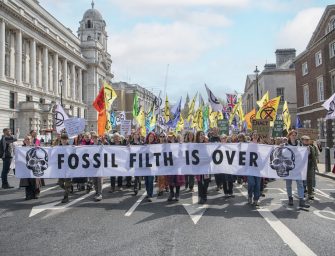
London’s largest ever public protests for climate and Earth justice have come to a close. An estimated hundred thousand attended the four-day event, organized by Extinction Rebellion and other UK groups, rallying around the theme, “Unite to Survive.”


Green Planet Monitor Podcast

Young Israelis who refuse to serve in the military. And, as climate catastrophe sweeps the planet, in the Swedish city, Goteborg, engineers and students are designing the sort of building where people can live – comfortably — without squandering Earth’s limited resources, or polluting its atmosphere


Israelis in Solidarity With Gaza

As Covid-19 sweeps across the planet, few scenarios are as frightening as an outbreak of the virus in Israeli-occupied Gaza. Four Israelis are refusing to let this happen, and are helping Gazans fend it off. They’ve launched a solidarity campaign to help Gazans out in this most grave crisis — and are calling for an end to Israel’s siege.


Covid-19 in Palestine: An Update

Hungry for news on the state of the Covid-19 pandemic in Israeli-occupied/colonized Palestine, I reached out by Skype to Rania Muhareb, a researcher with Ramallah-based Al-Haq, one of Palestine’s most prominent and respected human rights organizations. Rania spoke with me from her home in East Jerusalem.


Covid-19 in Gaza

As the Covid-19 pandemic sweeps around the planet, attention has been focused on the fate of the most vulnerable communities: those consigned to crowded urban slums, refugee camps and conflict zones across the Global South. No one more vulnerable to the highly infectious virus than the people of Gaza, under comprehensive Israeli blockade and siege for thirteen years.


Adapting to Climate Change Under Water Apartheid

Climate change is a human rights issue. Nowhere is this clearer than in Israeli-occupied/colonized Palestine, where land and natural resources required for climate adaptation are controlled by Israel, and systematically denied to Palestinians. Of all these resources, none are more vital than water.


Talking Palestine-Israel

A roof over one’s head. A home. Other than food and water, nothing is more essential to human life and health. Conversely, save forced starvation, there’s no better way to eliminate a people than to reduce their homes to rubble. No one knows this better, or carried out the practice more ruthlessly and efficiently, than the State of Israel.


A Tree Grows in Palestine

Tourists come to Al-Walaja from around the world to enjoy the lovely surrounding landscape. A huge olive tree, reputedly over 5000 years-old, is a big draw. For political tourists, Israel’s imposing “security barrier,” soon to enclose little Al-Walaja in a cage, is a must-see.


Silwan

As Donald Trump ponders whether or not to move the US Embassy in Israel to Jerusalem – endorsing Israel’s claim to the city as its “eternal, undivided capital” – Israel moves heaven and earth to cleanse East Jerusalem of its Palestinian residents.


A Village Called Battir

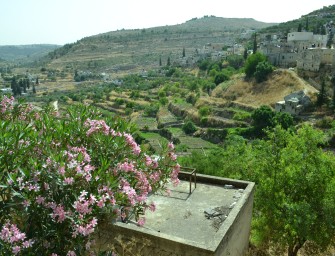
Standing on the edge of little Battir, I feasted my eyes on an astonishing sight: an amphitheater of ancient stone terraces covered in a cornucopia of fruits, vegetables, herbs and trees — including olive trees over a thousand years old.


Seven Days in Hebron

I took off for Hebron on a Sunday morning. Throngs of Israeli soldiers filled the bus station, soldiers on the move, barely more than teenagers, large backpacks and automatic weapons flung over their shoulders, smart phones in their hands.


Inka Milewski

https://media.blubrry.com/thegreenbluesshow/dl.dropboxusercontent.com/u/314577/GPM%20III/Audio%20stories/Inka_EC_bite.MP3

Inka Milewski was a marine biologist, not a public health researcher or epidemiologist, when she received a phone call from worried residents of her community. She took up that call. Had no choice. It was something she had to do.


The Mangroves of Southern Cambodia

http://media.blubrry.com/thegreenbluesshow/www.greenplanetmonitor.net/wp-content/uploads/2008/10/mangroves-1.mp3

They’re scrubby, fierce with mosquitoes and impossible to walk through, but salt water mangroves are the guardians of Earth’s tropical coastlines and nurseries for her fish. They’re also threatened.


City of Peace & Traffic Jams

https://media.blubrry.com/thegreenbluesshow/dl.dropboxusercontent.com/u/314577/GPM%20III/Audio%20stories/DarEsSalaam.mp3

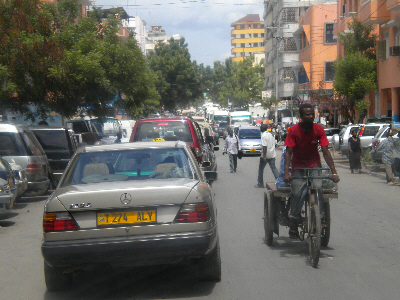
Dar es Salaam … City of Peace on Tanzania’s Indian Ocean coast. Driving a car into, out of or around the city, or commuting in one of the Tanzanian capital’s jam-packed dala-dalas, is anything but a peaceful enterprise.


Dharavi

http://media.blubrry.com/thegreenbluesshow/www.greenplanetmonitor.net/wp-content/uploads/2008/10/dharavi.mp3

Mumbai is the world’s third most populous city. This little neck of land dangling in the Arabian Sea is a Mecca for India’s corporate giants. But almost half of Mumbai’s eighteen million residents are poor and real estate moguls are squeezing them out.


Garbage in Paradise

http://media.blubrry.com/thegreenbluesshow/www.greenplanetmonitor.net/wp-content/uploads/2008/10/majuro-garbage.mp3

It’s easy to forget – living in the middle of a continent – that there are limits to the amount of dross we can toss. But when you’re living on an island, in the middle of the ocean, trash can get in your face


Thirteenth Transmission

http://media.blubrry.com/thegreenbluesshow/dl.dropbox.com/u/314577/Warm%20Wet%20Planet/Consumption.mp3

Astonishingly, the so-called ‘human’ species appropriates about twenty percent of its planet’s net productive capacity. Humanity’s insatiable consumptive thirst will have profound impact on the future development of life on Earth.


Eleventh Transmission

http://media.blubrry.com/thegreenbluesshow/dl.dropbox.com/u/314577/Warm%20Wet%20Planet/Cars.mp3

Human beings are deeply dependent on motorized machines to move themselves around. Trillions of these things now choke a vast and growing network of so-called “roads,” getting into deadly accidents and polluting the planet’s atmosphere.


Bumbire Island – Part 4

https://media.blubrry.com/thegreenbluesshow/dl.dropboxusercontent.com/u/314577/GPM%20III/Audio%20stories/Bumbire_Josie.mp3

In this final chapter in our series, Christine Hamilton and I head off to a fishing settlement called Lushonga, in search of a woman named Josie, who suffers from an advanced case of AIDS.


Bumbire Island – Part 2

http://media.blubrry.com/thegreenbluesshow/dl.dropbox.com/u/314577/GPM%20III/Audio%20stories/Bumbire_Christine.mp3

Bumbire Island sits on the northern tip of a sliver of an archipelago in southwest Lake Victoria, in Tanzania, East Africa. Nature on and around Bumbire is gorgeous—but the hardscrabble fishing camps scattered along its shores—and those of nearby rocky islets—are a different story.


Housing Rights For Women

https://media.blubrry.com/thegreenbluesshow/dl.dropboxusercontent.com/u/314577/GPM%20III/Audio%20stories/Women.mp3

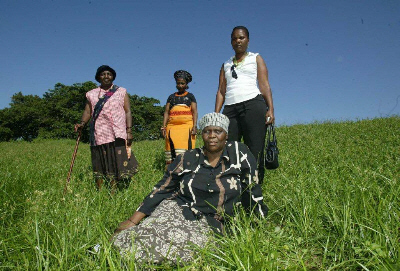
During South Africa’s Apartheid years, black families were routinely evicted from their land. Women and girls fared the worst. Sixteen years after the collapse of Apartheid, life in South Africa is as difficult as it’s ever been for women.


Palestinian Rappers

https://media.blubrry.com/thegreenbluesshow/dl.dropboxusercontent.com/u/314577/GPM%20III/Audio%20stories/PalestinianRappers.mp3

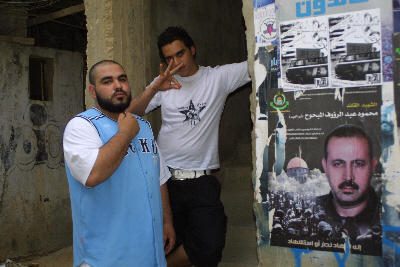
Palestinian rap is only about a decade old, but it has spread throughout Israel, Palestine, and now to Lebanon. The rappers look to Tupac Shakur and the socially conscious rappers, and reject the gangsta image so popular in the west.


Water in Tanzania

https://media.blubrry.com/thegreenbluesshow/dl.dropboxusercontent.com/u/314577/GPM%20III/Audio%20stories/WaterTanzania.mp3

Water is one of Tanzania’s scarcest commodities. In the capital city of Dar es Salaam, about sixty percent of households don’t enjoy a reliable supply. The surest bet is a twenty-liter bucket of precious water for one dollar.


Fringe Education

https://media.blubrry.com/thegreenbluesshow/dl.dropboxusercontent.com/u/314577/GPM%20III/Audio%20stories/Intercultural.mp3

Poor farmers have always set off to the nearest big city in search of income. Opportunities are often a dream, and obstacles abound. Many forsake their most valuable asset – their own traditions.


Bolivians With Disabilities

https://media.blubrry.com/thegreenbluesshow/dl.dropboxusercontent.com/u/314577/GPM%20III/Audio%20stories/Disabilities.mp3

The development of rights for disabled people in industrialized countries is an encouraging trend – a sign of inclusiveness in this age of division and disparity. Imagine what it’s like to be a disabled person in a country like … Bolivia.


Sustainable Transit in Dar es Salaam

https://media.blubrry.com/thegreenbluesshow/dl.dropboxusercontent.com/u/314577/GPM%20III/Audio%20stories/LetterFromTanzania.mp3

In the Tanzanian capital of Dar Es Salaam, a metropolis known for its astonishing traffic jams, urban planners are working on a new mass transit system that will hopefully make everyone’s lives and workday much more peaceful.