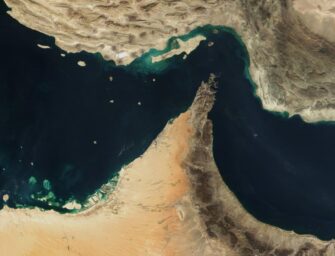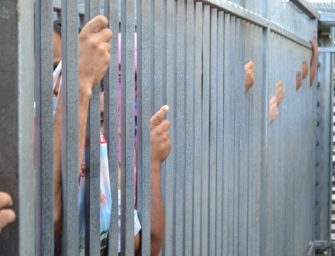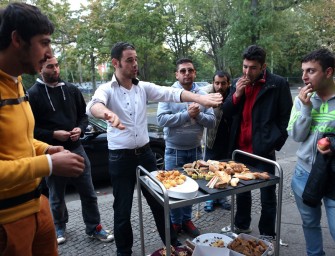
Once it was clear the number of refugees arriving in Germany would top one million, reactions varied dramatically. Months later, a divided society is still debating its role as a refuge for the second time since the end of the cold war.
Human habitat
ArticlesLast fall I rode 1500 miles from Taos, New Mexico to New Orleans on a 1983 Yamaha xs-650. It was my first solo, long distance bike trip and New Orleans — a legendary city — seemed like a good destination.
Checkpoint 56, in Israeli-occupied Hebron, is a fearsome sight to behold. Flashed before your eyes in a Rorschach test, it could be taken for a high-voltage substation, or an industrial meat grinder.
Camphill residents would never describe their community as an institution. It’s home, community, and a way of life.
It’s not a new or unique story. The factories in a blue-collar industrial town grow silent and the character of the city surrounding them is transformed.
Things constantly change. Everyone knows it. Steady, sometimes sudden change provides contour to individual human lives. Now, it seems humans have changed planet Earth like it’s never been changed before.
Like Earth’s climate, Manitoba Hydro’s office tower — in the city of Winnipeg — is an integrated system. As Earth’s climate warms, energy efficient buildings like this will be in demand.
As the world holds its breath, waiting for Israel to demolish the little village of Susya, in the occupied West Bank, here’s a report to listen to from back in 2012. Today, Susya’s destruction could come at any moment.
First in a series of fragmentary voice transmissions from a planet in crisis. Earthlings speak about the place they call home.
There’s a quiet killer living in the walls of traditional adobe houses in Central and South America. You can’t see it; you can’t hear it. It sneaks out at night, crawling or tumbling into your bed.
In the rolling foothills of the Canadian Rockies, where cattle peacefully graze and ranchers retire to handsome chalets, a purple haze hovers. Fracking is being blamed not only for air pollution, but for a litany of health complaints.
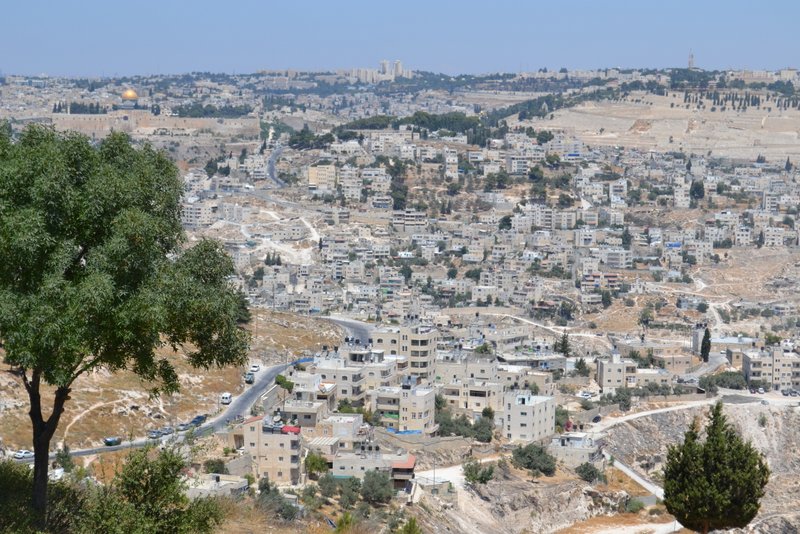
The Israeli Committee Against Home Demolitions (ICAHD) runs tours of Palestinian East Jerusalem. Visitors from around the world learn the ins and outs of Israel’s occupation.
On the occasion of Winnipeg’s annual “Negev Gala,” organized by the Canadian chapter of the Jewish National Fund, a couple of dozen local activists (quite a few of them Jewish) gathered in humorous protest.
The “Nakba” began in late November 1947, six months prior to Israel’s declaration of independence. When it was through, some 750,000 Palestinians had fled, and an estimated four hundred villages were demolished.
Diana Daunheimer and her husband Derek were a typical young couple pursuing their dreams — raising kids and growing good food at their Alberta homestead. But in 2008, a nastier crop sprouted around her property.
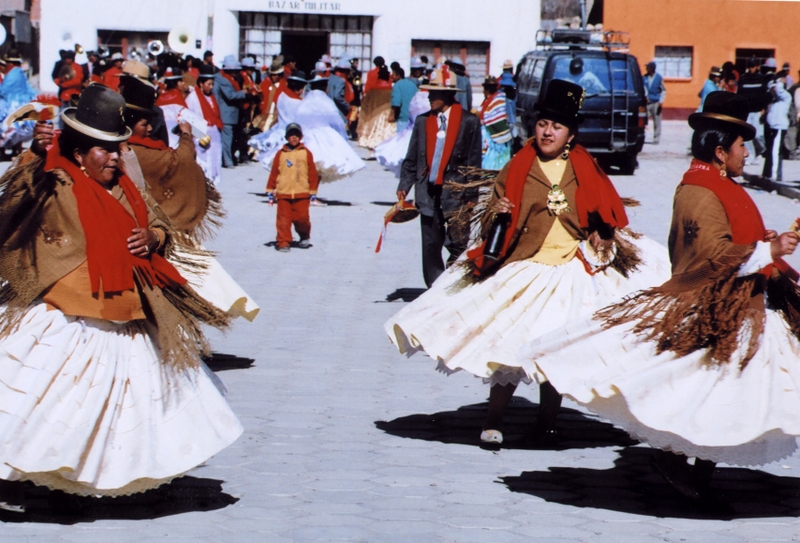
The slow-food movement has reached the sun-baked, Bolivian altiplano. Here, small-scale producers are making the most of scarce water supplies, ample sun and local expertise to grow food at the top of the world.
Imagine what it would be like to have your home water supply morph into a fire hazard — the liquid flowing from your tap liable to explode if you light a match.
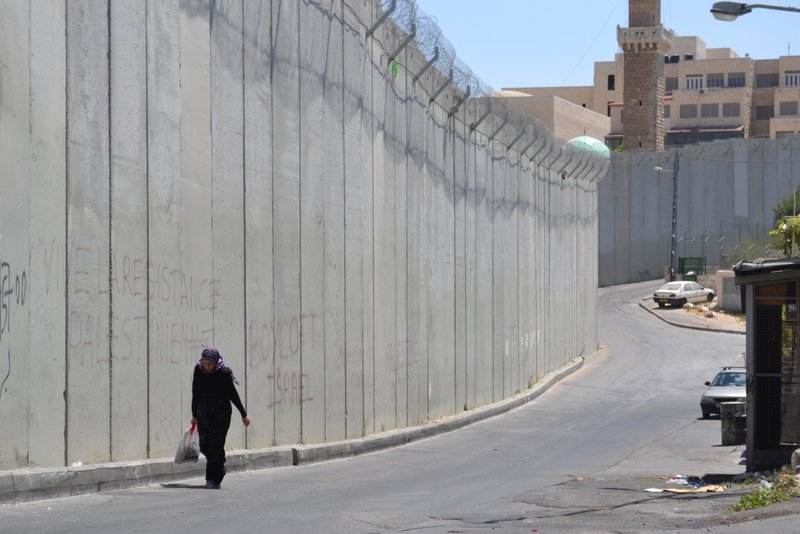
Israel’s “Separation Barrier” — some call it the “Apartheid Wall” — is one of those works of human ingenuity that has to be seen to be fully appreciated.
Podcast: Play in new window | Download
Subscribe: RSS
Inka Milewski was a marine biologist, not a public health researcher or epidemiologist, when she received a phone call from worried residents of her community. She took up that call. Had no choice. It was something she had to do.
The Bay of Fundy, on the north shore of the Canadian province of Nova Scotia, is one of Earth’s great wonders. Listen to Matt Abbott, a Fundy Baykeeper.

Latest Comments
[…] US military nuclear testing site. At the time, residents were relocated to nearby Rongerik and Kwajalein atolls before arriving at Kili Island in […]