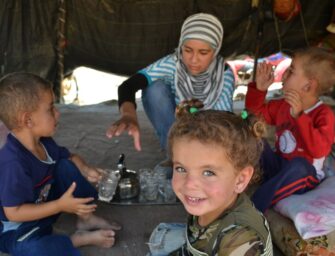
The Islamic Resistance Movement (Hamas), its leaders and armed militants are alien to Gaza and its people. They’ve parachuted in from some other place and are hiding out in the Gaza population — criminally and cynically — using ordinary, innocent Gazans as human shields. Such is the wisdom of the highest authorities. Ilan Pappe sees things differently. “They’re an organic part of the population,” the Israeli-British historian told the GPM. In his groundbreaking 2006 work, The Ethnic Cleansing of Palestine, Pappe described the origin of Gaza’s people, driven from their lands in the 1948 Nakba. Listen to our conversation.
Middle East
ArticlesPodcast (the-green-blues-show): Play in new window | Download
Subscribe: RSS
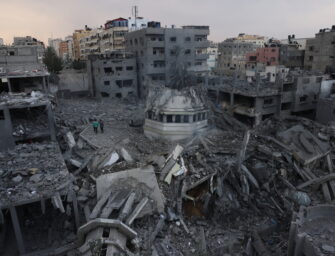
The dreadful events of October 7 didn’t happen in a vacuum. As Israel retaliates, reducing little Gaza to rubble, in the occupied West Bank, Israeli soldiers and settlers work hand in hand, driving Palestinians from their land. Gazing on Israeli super-violence, genocide comes to mind.
Almost a month after the brazen assault on Israeli communities by Gaza militants, smashing through and flying over the militarized perimeter of their besieged ghetto, Israeli retaliatory super-violence is now shifting into high gear. The GPM speaks with Fathi Nimer, from the Al-Shabaka Palestinian Policy Network, and Dror Sadot, from the Israeli human rights group, B’Tselem.
Podcast (the-green-blues-show): Play in new window | Download
Subscribe: RSS
Terrorist atrocities in Israel, Israeli atrocities in return. Seeds sown, reaped, then sown again. Israel-Palestine, Russia-Ukraine, the US vs. Russia and China … What sense to be made?
An interview with Dutch-South African law scholar John Dugard, former UN Special Rapporteur on the human rights situation in Palestine, about Israel’s latest assault on Gaza.
Podcast (the-green-blues-show): Play in new window | Download
Subscribe: RSS
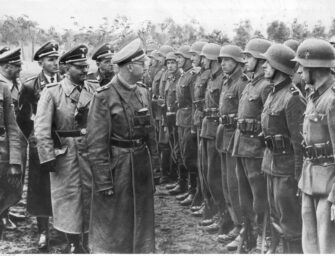
A small Canadian lake records humanity’s impact on Planet Earth. On the floor of Canada’s House of Commons, an old Nazi veteran gets a standing ovation. And, when official enemies are to blame, Canada calls for justice. For a beloved ally, Canada calls for justice to be suspended.
On Day Two of the Israeli military’s latest assault on the Palestinian city of Jenin and its refugee camp, I speak with Mustafa Sheta, the General Manager of the Jenin Freedom Theatre.
Podcast (the-green-blues-show): Play in new window | Download
Subscribe: RSS
Underground fungal networks, pulsating with nutrients; storing mountains of carbon. On Lebanese hilltops, ancient cedars grow, against all odds. And, looking back at a cosmic event of colossal proportions, that rippled space-time.
Podcast (the-green-blues-show): Play in new window | Download
Subscribe: RSS
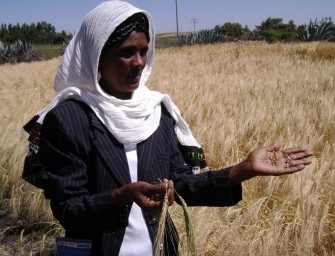
“War is not healthy for children and other living things.” It isn’t healthy for Planet Earth’s climate system either. The cradle of crop diversity here on Planet Earth – Ethiopia. And, Israel-Palestine – a discreet toponym, six syllables tripping off the tongue.
The A-word seems apt. How better to describe Israel’s national Covid vaccination campaign? Since December 20, Israeli health authorities have administered jabs of the Pfizer vaccine to an astonishing quarter of Israel’s ‘official’ population, while reportedly denying the vaccine to the five million Palestinians living under military rule in the occupied/colonized West Bank and Gaza.
No newsroom is too small to evade the vigilant and exacting gaze of staunchly pro-Israel “Honest” Reporting Canada. The PEI Guardian, based in Charlottetown, received a furious, hateful blast after publishing a letter about Covid-19 in occupied Palestine. Listen to what Israeli human rights NGO B’Tselem has to say on the matter.
As Covid-19 sweeps across the planet, few scenarios are as frightening as an outbreak of the virus in Israeli-occupied Gaza. Four Israelis are refusing to let this happen, and are helping Gazans fend it off. They’ve launched a solidarity campaign to help Gazans out in this most grave crisis — and are calling for an end to Israel’s siege.
Hungry for news on the state of the Covid-19 pandemic in Israeli-occupied/colonized Palestine, I reached out by Skype to Rania Muhareb, a researcher with Ramallah-based Al-Haq, one of Palestine’s most prominent and respected human rights organizations. Rania spoke with me from her home in East Jerusalem.
As the Covid-19 pandemic sweeps around the planet, attention has been focused on the fate of the most vulnerable communities: those consigned to crowded urban slums, refugee camps and conflict zones across the Global South. No one more vulnerable to the highly infectious virus than the people of Gaza, under comprehensive Israeli blockade and siege for thirteen years.
Late last January, after over a year of teasing talk and suggestive leaks, US President Donald Trump finally announced his so-called “Deal of the Century,” ostensibly aimed at resolving what is commonly referred to as the Israel-Palestine “conflict.”Predictably, Trump’s deal has been widely referred to in the mainstream media as a “peace plan.” Nothing could be further from the truth.
In a hyper-polarized world where everyone disagrees about everything and even the most straightforward affairs seem uncertain, an eminently erudite, well-traveled and literate critic is liable to draw a large crowd. Robert Fisk, dean of Middle East journalism, is one such man.
The cedar is Lebanon’s national symbol. But Lebanon’s renowned cedar forests are not what they used to be. Today, all that remains of Lebanon’s cedar forests are a dozen fragmented islands, threatened by livestock grazing and climate change. The key to restoring them is their genetic diversity.
Interviews that go sideways, or south. They tend to end suddenly, in response to the question that shouldn’t have been asked. Such was the case in this conversation with Ha’aretz columnist Amira Hass, in response to a question Amira didn’t let me finish, about the international community’s declared, though deceitful support for a two-state solution between Israel and the Palestinians. Thankfully, our conversation continued. Very lively.
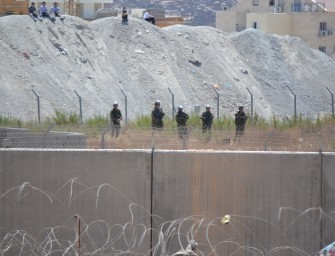
Tourists come to Al-Walaja from around the world to enjoy the lovely surrounding landscape. A huge olive tree, reputedly over 5000 years-old, is a big draw. For political tourists, Israel’s imposing “security barrier,” soon to enclose little Al-Walaja in a cage, is a must-see.

Latest Comments
[…] US military nuclear testing site. At the time, residents were relocated to nearby Rongerik and Kwajalein atolls before arriving at Kili Island in […]