Podcast (the-green-blues-show): Play in new window | Download
Subscribe: RSS
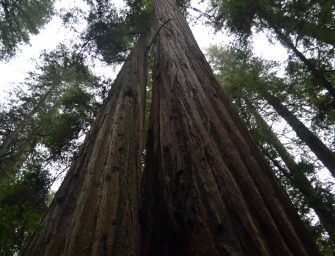
The Earth Chronicles — Trees & Earth. Something I produced back in 1993. Still makes sense.
Podcast (the-green-blues-show): Play in new window | Download
Subscribe: RSS
The Earth Chronicles — Trees & Earth. Something I produced back in 1993. Still makes sense.
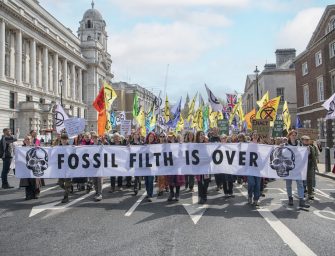
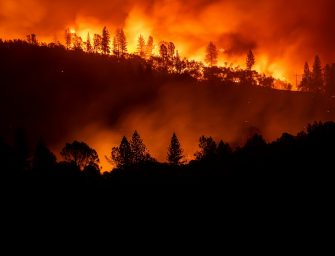
For people sweltering in Earth’s rising heat, driven from their homes by wildfire, swept away by rising floods or impoverished by drought, numbers don’t adequately capture the misery Earth’s human-made climate crisis is dishing out.
London’s largest ever public protests for climate and Earth justice have come to a close. An estimated hundred thousand attended the four-day event, organized by Extinction Rebellion and other UK groups, rallying around the theme, “Unite to Survive.”
Podcast (the-green-blues-show): Play in new window | Download
Subscribe: RSS
Young Israelis who refuse to serve in the military. And, as climate catastrophe sweeps the planet, in the Swedish city, Goteborg, engineers and students are designing the sort of building where people can live – comfortably — without squandering Earth’s limited resources, or polluting its atmosphere
Drug-resistant infections – the new pandemic? And, a tangled network of tiny tubes, pulsating beneath our feet. Fungal networks below ground sustain life above.
The A-word seems apt. How better to describe Israel’s national Covid vaccination campaign? Since December 20, Israeli health authorities have administered jabs of the Pfizer vaccine to an astonishing quarter of Israel’s ‘official’ population, while reportedly denying the vaccine to the five million Palestinians living under military rule in the occupied/colonized West Bank and Gaza.
While fierce criticism of the State of Israel is routinely declared “antisemitic” by Israel’s defenders, no one is more outspoken in their condemnation than Jewish Israelis themselves. Ronnie Barkan is a case in point. Listen to our conversation.
As Covid-19 sweeps around the planet, news has focused on places where death tolls have been high: Italy, Mexico, Brazil, the US and — of course — China, where the pandemic began. Early predictions about the potential for outbreaks in Africa have yet to materialize. Whether swift lock downs or non-reporting is the reason is unclear. I spoke with GPM correspondent Josephat Mwanzi, in the Tanzanian capital, Dar es Salaam.
No newsroom is too small to evade the vigilant and exacting gaze of staunchly pro-Israel “Honest” Reporting Canada. The PEI Guardian, based in Charlottetown, received a furious, hateful blast after publishing a letter about Covid-19 in occupied Palestine. Listen to what Israeli human rights NGO B’Tselem has to say on the matter.
As Covid-19 sweeps across the planet, few scenarios are as frightening as an outbreak of the virus in Israeli-occupied Gaza. Four Israelis are refusing to let this happen, and are helping Gazans fend it off. They’ve launched a solidarity campaign to help Gazans out in this most grave crisis — and are calling for an end to Israel’s siege.
Hungry for news on the state of the Covid-19 pandemic in Israeli-occupied/colonized Palestine, I reached out by Skype to Rania Muhareb, a researcher with Ramallah-based Al-Haq, one of Palestine’s most prominent and respected human rights organizations. Rania spoke with me from her home in East Jerusalem.
As the Covid-19 pandemic sweeps around the planet, attention has been focused on the fate of the most vulnerable communities: those consigned to crowded urban slums, refugee camps and conflict zones across the Global South. No one more vulnerable to the highly infectious virus than the people of Gaza, under comprehensive Israeli blockade and siege for thirteen years.
Late last January, after over a year of teasing talk and suggestive leaks, US President Donald Trump finally announced his so-called “Deal of the Century,” ostensibly aimed at resolving what is commonly referred to as the Israel-Palestine “conflict.”Predictably, Trump’s deal has been widely referred to in the mainstream media as a “peace plan.” Nothing could be further from the truth.
I met Vivien Sansour for the first time back in 2016, in her home town of Beit Jala, on the southern edge of Bethlehem, in Israeli-occupied Palestine. An anthropologist by training, Vivien has turned to the promotion of food and the cultural sovereignty tied to growing one’s own and saving the seeds, as her life’s work.
In a hyper-polarized world where everyone disagrees about everything and even the most straightforward affairs seem uncertain, an eminently erudite, well-traveled and literate critic is liable to draw a large crowd. Robert Fisk, dean of Middle East journalism, is one such man.
The cedar is Lebanon’s national symbol. But Lebanon’s renowned cedar forests are not what they used to be. Today, all that remains of Lebanon’s cedar forests are a dozen fragmented islands, threatened by livestock grazing and climate change. The key to restoring them is their genetic diversity.
Planet Earth is covered in water. Ninety-seven percent is in earth’s oceans. Most of the rest is frozen solid — locked up in sea ice and terrestrial ice sheets, glaciers and permafrost. Earth’s cryosphere plays a huge role in regulating climate. As our planet warms, its cryosphere is slowly melting, triggering positive feedbacks that make earth scientists worry.
Climate change is a human rights issue. Nowhere is this clearer than in Israeli-occupied/colonized Palestine, where land and natural resources required for climate adaptation are controlled by Israel, and systematically denied to Palestinians. Of all these resources, none are more vital than water.
Long before the ‘intractable conflict’ between Israeli Jews and Palestinians gets resolved, climate change will have thrown everything up for grabs — literally. It already has.
That awful A-word, preceded by the adjective ‘Israeli’. Israel boosters scream ‘antisemitism’ when they hear or read the phrase. Mainstream media avoid it like the plague. The international legal community has no difficulty likening Israel’s system of governance in the colonized West Bank to the South African prototype. Listen to my conversation with Professor Dugard.
Latest Comments
[…] US military nuclear testing site. At the time, residents were relocated to nearby Rongerik and Kwajalein atolls before arriving at Kili Island in […]