
Poetry From Israel-USA's Dachau on the Med
Podcast (the-green-blues-show): Play in new window | Download
Subscribe: RSS
In Gaza today, rendered largely uninhabitable after a thousand days of joint US-Israeli genocide, young women and men are writing poetry — and publishing it.
Inside Nazi Germany’s ghettos and concentration camps — Warsaw, Krakow, Lodz, Auschwitz, Sobibor, Dachau, Buchenwald — Jewish poets wrote poetry too.
Inside Israel-USA’s concentration camp on the Mediterranean, poets are organizing themselves.
Donate with a $15/monthly subscription
Coastal Lines Press is a new Gaza poetry collective, currently consisting of 38 writers. Facilitated by a global network of illustrators and distributors, they aim “to turn words into life-saving supplies for their families.”
“Like vessels at sea,” Coastal Lines says at their website, Gaza zines “travel from coast to coast, drawing lines of human connection and solidarity.”
Coastal Lines is also a fund-raising venture. Donations can be forwarded to each of the collective’s writers. Follow the QR codes and crowdfunding links at the Coastal Lines website.
The GPM spoke with two of Coastal Lines’ poets, and will be speaking with more in the weeks to come.
Noor Abu Mariam (Noor Arif) is a business administration student, social media coordinator with the Gaza Great Minds School, and a prolific writer. She has written for The Palestine Chronicle, Impulse, and We Are Not Numbers.
The GPM connected with Noor in Gaza. We’ll feature our full conversation next week.
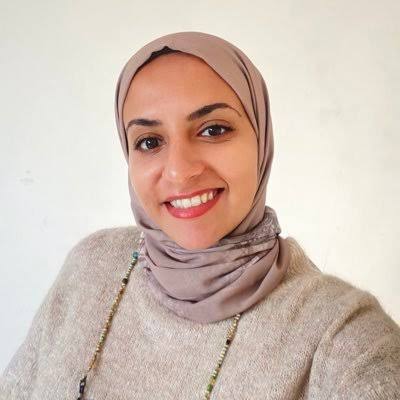
Noor Abu Mariam
For now, listen to Noor read two of her poems, sent to us by WhatsApp — ‘Waiting for the Butterfly’, and ‘Grief Came to Me Like a Monster’.
Listen to Noor’s poems in today’s GPM podcast. Click on the play button on the top of this story, or go here.
Listen to them here:
The GPM also reached out to Lama Alharazin, speaking to us from the ruined apartment where she lives in Gaza City. Lama is 24 years-old. She received an English Literature and Translation degree at the Islamic University of Gaza in September 2023, a month before Hamas’ daring assault on southern Israel, and the start of Israel-USA’s genocidal assault on its Gaza concentration camp, now past its thousandth day. Lama’s university now lies in ruins, demolished by US bombs. She hopes to continue her education in the UK or Ireland.
Lama has produced one zine to date, a collection of 21 poems entitled ‘Rain Was Once a Promise’.
Listen to our conversation in today’s GPM podcast. Click on the play button on the top of this story, or go here.
Listen to our complete conversation here:

Rwandan genocide museum (David Kattenburg)
In Rwanda, east/central Africa, the 32nd anniversary of the 1994 genocide has just come to a close.
Over the course of those awful hundred days, between April 7 and July 15, 1994, an estimated eight hundred thousand ethnic Tutsis and a lesser number of their Hutu neighbors were brutally killed by Hutu extremists armed with knives, hoes and machetes.
Donate with a $15/monthly subscription
Over Rwanda’s airwaves, venom flowed. Announcers at Radio-Television Mille Collines (from Rwanda’s popular nickname, the ‘Land of a Thousand Hills’), urged listeners to “kill the cockroaches.”
Established in July 1993 by Hutu extremists “to create harmonious development in Rwandan society,” RTLM became the genocide’s key driving force, mobilizing grassroots members of the notorious Interahamwe militia.
Fueling the furnace of racial hatred, RTLM chiefs distributed both machetes and cheap pocket radios, in huge numbers.
Efforts to halt the genocide, through an enforceable UN resolution, were blocked by the Clinton White House.
Unlike its open support for Israeli genocide in Gaza, thirty years later, US support for the Rwandan genocide was tacit and sophisticated.
“[The] US wanted to see its imperial proxy, the Rwandan Patriotic Front (RPF) led by General Paul Kagame, seize power in Rwanda’s capital, Kigali,” this 2024 analysis says. “It wanted to displace France and the French language and establish itself as the dominant power in East and Central Africa. It wanted ready access to the immense mineral wealth of Rwanda’s neighbor, the Democratic Republic of the Congo, which Rwanda and Uganda would invade two years later.”
Listen to my documentary about the Rwandan genocide, produced back in 2009, for CBC Radio’s Dispatches program. Click on the podcast play button at the top of this story, or go here.
Listen to another story of mine for CBC Radio, here:
Donate with a $15/monthly subscription


Latest Comments
[…] US military nuclear testing site. At the time, residents were relocated to nearby Rongerik and Kwajalein atolls before arriving at Kili Island in […]